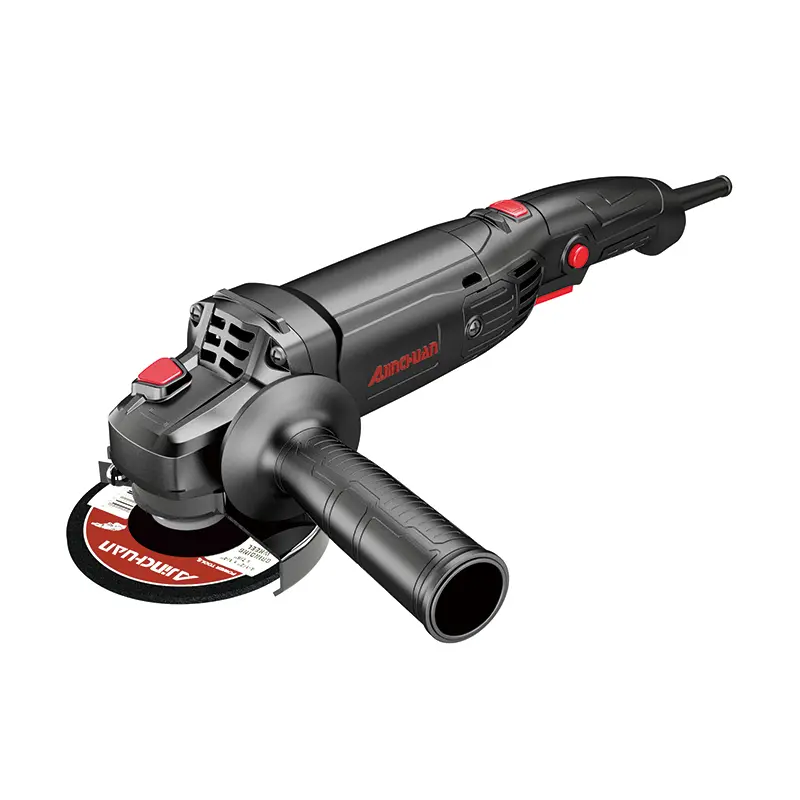
For power tool wholesalers targeting the North American market, the 6-inch angle grinder represents a high-potential yet fiercely competitive segment. The 1500-125 RT model, featuring a wide speed range of 3000–8500 RPM, has become the top choice for professional and industrial buyers due to its versatility in cutting, grinding, and polishing applications.
However, securing reliably performing products while maintaining healthy profit margins remains the core challenge at the negotiation table. This article provides a value-based procurement negotiation framework to help you strike the optimal balance between price and performance.
In-Depth Understanding of North American Market Demand for 6-Inch Variable Speed Angle Grinders
Before entering negotiations, clarify your target audience and their definition of a “high-performance” 6-inch angle grinder.
Professional Users Prioritize Control & Durability
For metal fabricators, pipe fitters, and auto mechanics, the 3000–8500 RPM variable speed function is not merely a specification—it is a productivity tool. Users require low speeds for precision grinding and wire brushing, and high speeds for fast cutting.
During negotiations, emphasize motor stability across all RPM ranges, as well as the durability of the gearbox and bearings.
Industrial Buyers Focus on Safety & Compliance
Industrial customers enforce strict safety standards and certifications. Ensuring your 1500-125 RT model meets North American safety regulations is a non-negotiable baseline for negotiations.
DIY Consumers Value Ease of Use & Cost-Effectiveness
For home garage users, product weight, vibration levels, and operational convenience are critical. A competitive procurement price directly strengthens your market positioning.
Building a Value-Based Procurement Negotiation Framework
Negotiations with suppliers should extend beyond unit-price haggling to focus on total cost of ownership and market value.
Shift Focus from Cost to Value
Instead of asking “Can you lower the price?”, frame questions around quality:
“What high-standard materials are used in key components of the 1500-125 RT to ensure reliable operation at 8500 RPM?”
This encourages suppliers to demonstrate technical advantages and quality assurance.
Strengthen Bargaining Power with Market Data
Prepare market insights beforehand. For example:
“We’ve observed that some competing models, despite lower prices, suffer significant RPM drops under load. Our customers require stable power delivery throughout the 3000–8500 RPM range.”
Technical, data-driven questions effectively qualify capable suppliers.
Leverage Long-Term Partnerships for Scale Effects
Communicate your long-term category commitment:
“If we reach a favorable price for the initial order and establish stable supply, we project a 50% increase in annual volume for the 1500-125 RT model.”
Use future growth to secure more favorable current pricing.
Key Quality Indicators for High-Performance Angle Grinders
To maintain negotiation leverage, establish internal performance benchmarks to validate supplier pricing against real value.
Motor & Power Transmission System
As the core of the grinder, high-performance 1500-125 RT units use powerful universal motors and high-strength gears.
Negotiate details including:
- Motor insulation class
- Carbon brush service life
- Gear material (powder metallurgy / precision-ground gears)
Electronic Speed Control & Soft Start
The wide 3000–8500 RPM range depends on precision control boards. Soft start protects the motor and electrical system while improving user experience—both serve as quality and bargaining benchmarks.
Ergonomics & Safety Features
Flexible Order Strategies to Optimize Total Cost
Beyond unit pricing, adjust order structure to improve overall cost efficiency.
Balance Customization and Standardization
Full OEM customization increases tooling and production costs. Instead, negotiate minor modifications on the supplier’s mature standard platform (branding and packaging only) to reduce MOQs and unit costs.
Optimize Logistics & Inventory Management
Negotiate flexible lead times and shipping terms, such as batch deliveries aligned with your sales cycle or cost-effective ocean freight, lowering holding costs and capital pressure.
Establish Quality Assurance & After-Sales Support Agreements
Include supplier response time and spare parts availability in negotiations. Clear warranty terms and reliable parts support reduce after-sales expenses, creating hidden value.
Conclusion: Building Mutually Beneficial Long-Term Partnerships
Successful procurement negotiation is not a zero-sum game, but a solution that creates value for both parties.
By understanding market needs, adopting a value-focused framework, and using flexible order strategies, North American power tool wholesalers can secure competitive pricing while upholding the performance of the 1500-125 RT 6-inch variable speed angle grinder (3000–8500 RPM).
Your goal is to partner with a manufacturing supplier that grows alongside your business—not merely the lowest-cost vendor. Professional, strategic negotiations will establish strong competitive advantages in this high-potential niche market.
#6inchanglegrinder #variablespeedanglegrinder #1500-125RT #NorthAmericanpowertoolwholesale #procurementnegotiationtips #balancepriceandperformance #powertoolprocurement #industrialprocurement #powertoolwholesale #anglegrinderwholesale
Post time:
Jun-02-2026