
Optimization of Starting Torque for Industrial-grade Angle grinders: Why Can They easily cut Hard Alloys?
In industrial processing sites, Angle grinders are almost “all-rounders”. From metal rust removal to weld bead grinding and cutting of high-hardness materials, they are indispensable. But what truly sets industrial-grade Angle grinders apart from ordinary models is not the numbers on the tachometer, but the performance of the starting torque. Especially when dealing with materials like hard alloy that are hard and brittle, ordinary Angle grinders often start weakly and even get stuck, while models with optimized starting torque can start immediately and cut steadily to the end.
Having been engaged in power tool matching and on-site services for many years, I have found that many people’s understanding of the concept of “torque” still remains at the level of “having great strength”. In fact, the torque at the moment of startup determines whether the Angle grinder can still maintain a stable feed of the blades when the load suddenly changes. The hardness of hard alloy is often several times higher than that of ordinary steel. The resistance at the moment the blade comes into contact is extremely high. If the starting torque is insufficient, the motor may be “stuck”, resulting in a significant drop in rotational speed at best, and triggering protection or even stopping at worst, affecting the continuity of processing.
The optimization of the starting torque for industrial-grade Angle grinders first comes from the matching of the motor and the control circuit. The current of traditional series-excited motors rises rapidly at the moment of power-on, but the torque curve is relatively steep, and they are prone to short-term drops when encountering hard loads. Nowadays, many industrial models have adopted high magnetic energy product rotors in combination with wider copper wire cross-sections, making the initial electromagnetic torque more full. At the same time, soft start or vector control logic is added to the drive circuit to make the current output more linear, avoiding shock while fully releasing the available torque during the start-up stage. In this way, when the grinding wheel or cutting disc touches the surface of the hard alloy, the motor can still maintain a stable rotational speed and continuously deliver force to the cutting point.
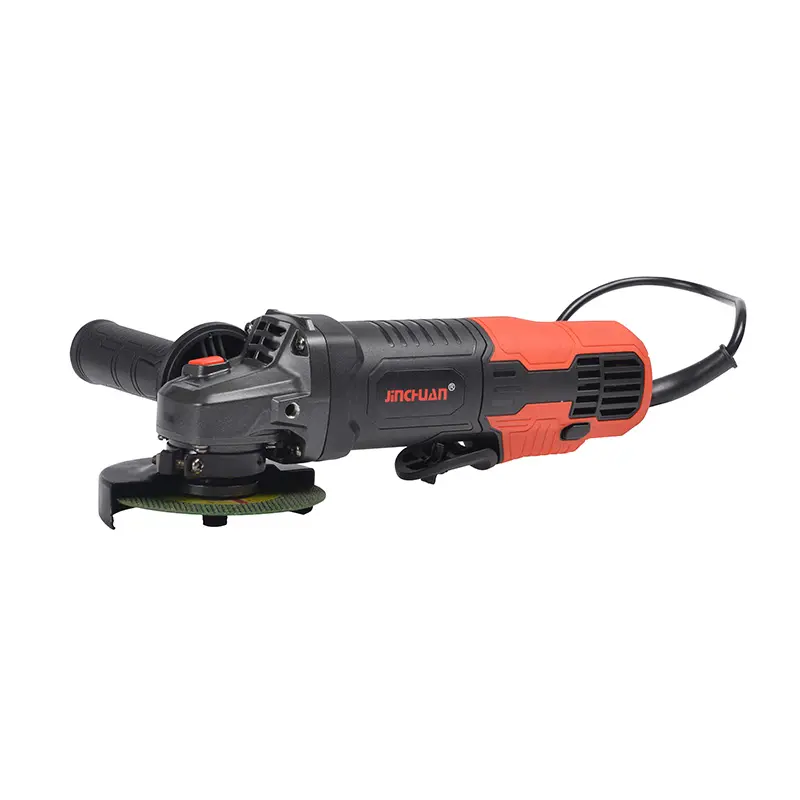
Another factor that is often overlooked is the supporting stiffness of the gearbox and bearings. The starting torque is not just the responsibility of the motor; every link in the transmission chain must be able to “withstand the force”. Industrial-grade Angle grinders are equipped with high-precision helical or planetary gear sets, which ensure more uniform tooth surface contact, lower transmission loss, and the force direction of the bearings is optimized to reduce axial disturbance during the start-up stage. In this way, during the process of transmitting the large torque from the motor to the spindle, it will not be consumed due to resonance or backlash, and the moment the blade cuts into the hard alloy remains crisp and efficient.
The heat dissipation strategy is also indirectly helping to “sustain” the starting torque. Hard alloy cutting often takes several seconds to tens of seconds, during which the temperature of the motor and gearbox rises rapidly. If heat dissipation cannot keep up, the winding resistance will increase, the magnetic field strength will decrease, and the torque output will be attenuated. Industrial-grade models often have forced air ducts arranged around the stator and use alloy shells with better heat conduction at key parts to dissipate heat as soon as possible, ensuring that the motor performance is not compromised during the window period of high-torque output.
For process technicians in metal processing plants, heavy equipment maintenance teams, and technicians engaged in precision mold processing, the optimization of starting torque means higher operational efficiency and more stable processing quality. Hard alloy is not like ordinary steel that can be “gnawed” with a little force. It is more like a tough nut to crack and requires tools to “hold on” from the very beginning. A smoothly started Angle grinder can reduce the ineffective actions of repeated starts and stops, and also lower the risk of blade chipping caused by jamming. This is particularly important in batch processing or operations in confined Spaces.
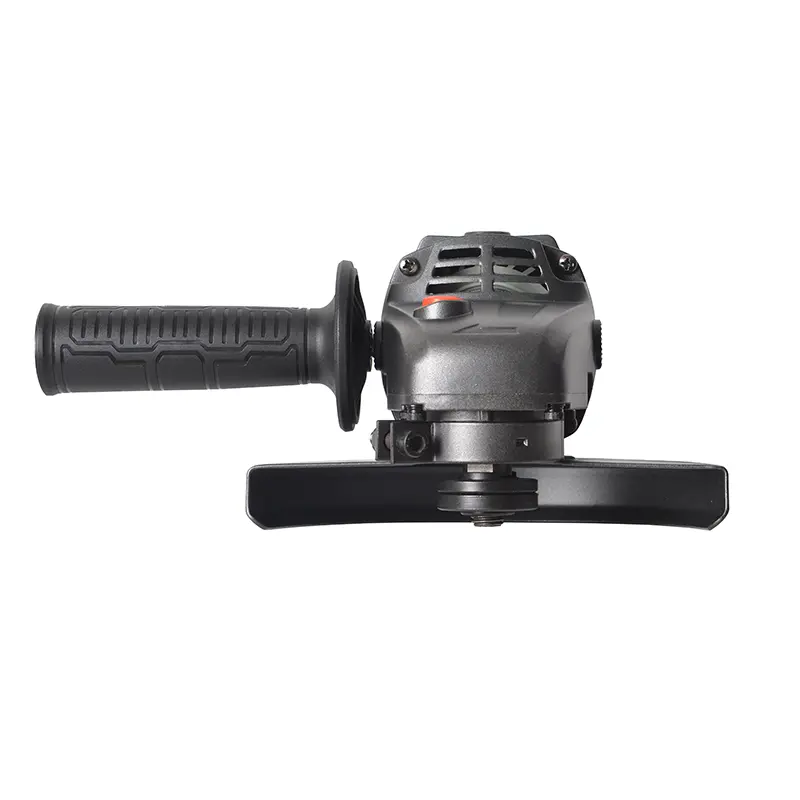
It is worth noting that optimizing the starting torque does not imply high power consumption throughout the entire process. Modern industrial-grade Angle grinders dynamically adjust their output according to load changes. They maintain energy conservation and low vibration under light loads. Once they sense an increase in cutting resistance, they immediately push up the reserved torque. Such “on-demand force application” not only protects the lifespan of the motor and power tools but also prevents the operator from having difficulty controlling due to sudden surges.
Ultimately, the reason why industrial-grade Angle grinders can easily cut hard alloys is that the optimization of starting torque has connected the entire chain from motor electromagnetic design, transmission rigidity to thermal management, ensuring that the tool has reliable power reserves at critical moments. For on-site workers, this means fewer pauses, a smoother feel and more consistent processing results. When choosing an Angle grinder, it is advisable to pay more attention to its torque curve characteristics and load response speed, as these are often the key to distinguishing between “usable” and “user-friendly”.
Post time: Dec-18-2025