
Guide to the Types of grinding wheels and Cutting Thicknesses suitable for 230mm Heavy-duty Angle Grinders
In the field of power tools, the 230mm heavy-duty Angle grinder is one of the main models for on-site processing. It has sufficient power and stable torque, and can handle cutting metals, stones and concrete. However, to make it both safe and efficient, choosing the right type of grinding wheel and the appropriate cutting thickness is crucial. Many purchasers and on-site users tend to overlook one point: not just any 230mm diameter grinding wheel can be put on the machine. The differences in materials, binders and thicknesses directly affect the cutting performance and service life.
Based on the large number of B2B users we have come into contact with, construction sites, steel structure factories, metal processing workshops and maintenance centers are the main application scenarios of 230mm Angle grinders. These environments have high requirements for cutting efficiency and the durability of grinding wheels. Moreover, the working conditions are often accompanied by dust, vibration and continuous operation. If the grinding wheel is not properly selected, at the very least, the cutting will be difficult and the cut surface will be rough; at worst, it will bring safety hazards.
Let’s start with the types of grinding wheels. Commonly, they can be divided into two major categories: cutting grinding wheels and grinding wheels. Among them, for a size of 230mm, cutting is the most common. Cutting types can be further classified by their uses:
Resin cutting grinding wheels: They have strong versatility and are suitable for metal materials such as carbon steel, stainless steel, and cast iron. They feature fast cutting speed and good self-sharpening property, but wear relatively quickly under high loads.
Diamond cutting grinding wheels: Specifically designed for non-metallic hard substrates such as stone, concrete, tiles, and refractory materials, they feature a long service life, excellent thermal stability, and are less prone to high-temperature chipping during cutting.
Fiber-reinforced cutting grinding wheel: By adding glass fiber mesh to resin, it has a higher tensile strength and is suitable for cutting thicker or high-strength metals. Its impact resistance is superior to that of ordinary resin sheets.
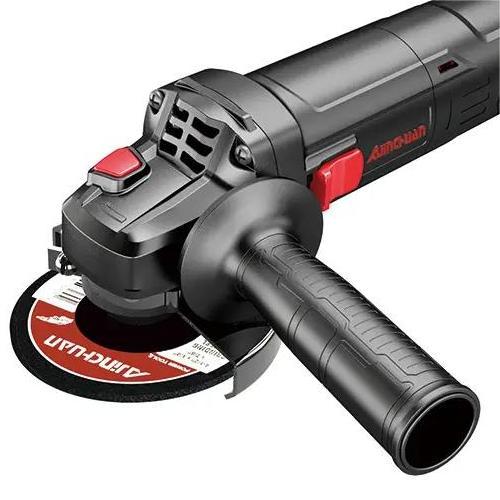
The formula of each type of binder and the particle size of the abrasive are different. When choosing, the hardness and thickness of the material to be cut should be taken into account for judgment. For instance, when cutting thick-walled steel pipes or I-beams, using fiber-reinforced cutting grinding wheels is more stable and less likely to break during high-speed rotation. When cutting granite or precast concrete components, diamond cutting grinding wheels are preferred as they can maintain straightness and reduce burrs.
Let’s talk about the cutting thickness again. The common thicknesses of 230mm grinding wheels are 2.5mm, 3mm and 4mm. The thickness not only determines the rigidity of the grinding wheel, but also affects the cutting ability and heat dissipation performance. Thin grinding wheels (such as 2.5mm) have a small moment of inertia, start quickly, and have a narrow cutting seam. They are suitable for fine cutting and materials sensitive to heat, but they have high requirements for operational stability and are prone to getting stuck in harder areas. Thick types (3mm, 4mm) have good rigidity and impact resistance, making them more suitable for rough cutting scenarios with high feed rates, such as removing steel beams or thick plates. They can maintain a relatively stable cutting line and reduce runout.
It should be noted that the rated speed of the Angle grinder should match the maximum working speed of the grinding wheel. The 230mm grinding wheel usually indicates the upper limit of RPM in the marked parameters. When used on site, it must not exceed the speed limit; otherwise, the centrifugal force will put the grinding wheel in a dangerous state. Although thick plates are more stable on large-diameter Angle grinders, if the rotational speed is too high, the risk of cracking will also increase.
We often suggest that when purchasing in bulk, the purchasing party should establish a grinding wheel selection table based on the material and thickness of the main processing objects, rather than making a unified purchase only based on the diameter. This way, not only can the cutting quality be guaranteed, but also the downtime caused by frequent replacement or mid-process breakage can be reduced. For continuous operation scenarios, alternating the use of grinding wheels of different thicknesses and types can make the equipment load more balanced and extend the service life of the main shaft and gearbox.
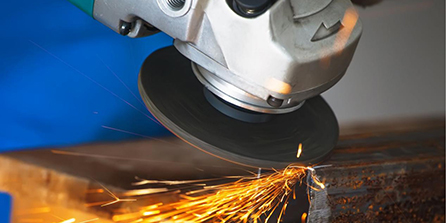
In addition, there are also certain requirements for the storage and installation of grinding wheels. Avoid moisture or freezing. When storing, place it flat or upright to prevent deformation. Before installation, check for cracks or edge defects. The size of the flange and the clamping force should comply with the specifications. What seems like details are actually related to the safety and efficiency of each cut.
Ultimately, the 230mm heavy-duty Angle grinder is very powerful, but to make it “obedient” and maintain stable output for a long time, the right work must be done in terms of the type of grinding wheel and the cutting thickness. A knowledgeable purchasing and on-site supervisor will regard this part as the core link of consumable matching, as it directly affects the production rhythm and operation safety. Choosing the right one is not only about cutting quickly, but also about cutting steadily and using it for a long time.
Post time: Dec-12-2025