
Guards and Auxiliary Handles: Simple in Appearance, Crucial for Safe Operation
Guards and auxiliary handles are fundamental accessories for power tools, yet their importance is often overlooked by users. Many construction sites remove guards or omit auxiliary handles for convenience, contributing to over 70% of annual power tool accidents. This not only causes personal injury but also triggers insurance disputes. This article examines real-world cases to dissect their safety functions, selection criteria, and usage standards, helping you mitigate risks and ensure compliance. Below, we analyze everything from core functions to practical details.
Guards: How to Select the Right Model to Prevent Splash Injuries?
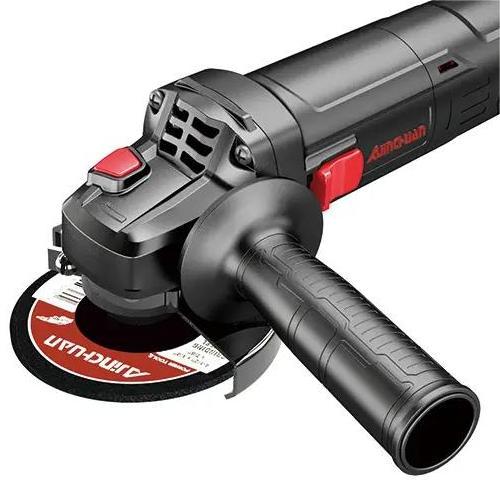
The primary function of a guard is to block flying debris and cushion unexpected impacts.
At a renovation site, an uncertified angle grinder guard shattered during stone cutting. Debris lacerated a worker’s face, halting the project for three days of rectification and incurring over ¥20,000 in losses.
After replacing it with a tempered glass guard compliant with EN 60745, similar risks dropped to zero. Prioritize thickened tempered glass for superior impact resistance and reduced fracture risk.
Common Question: What standards should be considered for cross-border procurement of guards? For the EU, focus on CE certification; for North America, prioritize UL certification. Ensure compatibility with corresponding tool models.
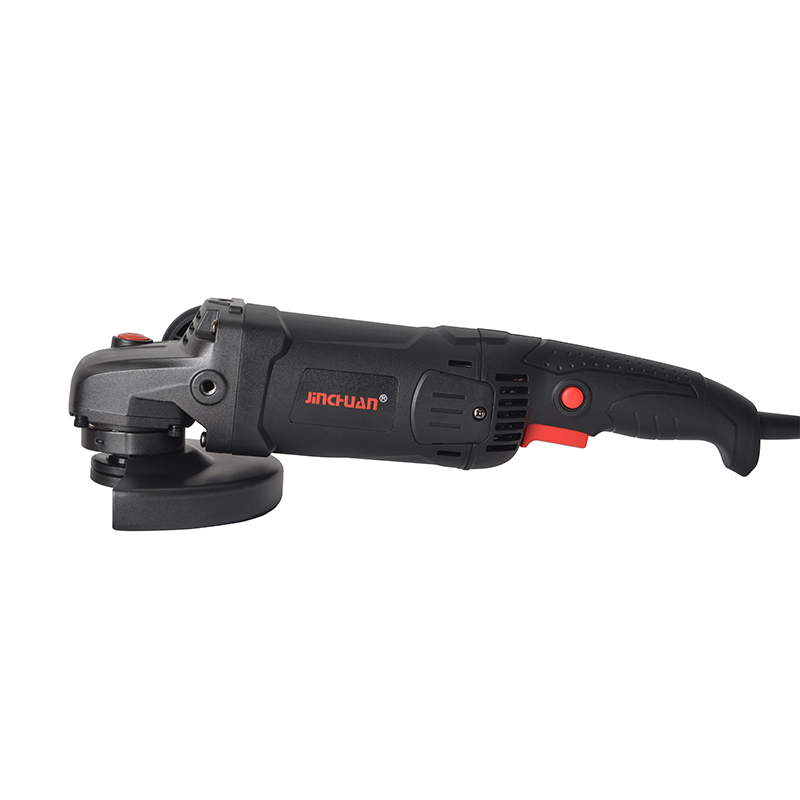
Auxiliary Handle: How does compatibility affect operational stability?
Auxiliary handles balance tools and distribute impact forces, making compatibility directly linked to safety.
At a furniture factory, a worker used a universal auxiliary handle with an electric hammer. During operation, the handle loosened. The tool slipped, damaging the workbench and scrapping the workpiece, increasing the loss rate by 15%.
After replacing it with an original manufacturer’s compatible handle, grip stability improved by 80%, and workpiece scrap rate dropped below 2%. Prioritize models with adjustable angles for adaptability across multiple work conditions.
Common Question: Are handles interchangeable across different models of the same brand? Most are not interchangeable; precise matching based on tool power and grip dimensions is required.
Guard and Handle Synergy: How to Adapt to Complex Work Scenarios?
Maximizing safety effectiveness requires coordinated operation between both components, with adjustments tailored to specific scenarios.
At a steel structure processing plant, workers failed to adjust the guard angle during high-altitude operations. Restricted grip on the auxiliary handle caused tool vibration, nearly resulting in a fall accident.
After adjusting the guard to match the working angle and pairing it with a non-slip auxiliary handle, high-altitude work safety reached 100%. Complex scenarios require pre-adjustment and adaptation.
Common Question: Do handles and guards require special treatment in humid environments? Select handles made of non-slip insulating materials; ensure guards are rust-proof and sealed.
FAQ: High-Frequency Questions on Power Tool Guards and Handles
1. How to replace guards for older power tools? First verify the tool model and output power. Request a compatibility list from the supplier to avoid non-standard parts that cannot be installed.
2. Does auxiliary handle material significantly impact safety? Yes, greatly. Prioritize glass-fiber reinforced nylon, which offers superior insulation and wear resistance compared to standard plastics.
3. How to verify accessory compatibility with local tool standards during cross-border procurement? Provide tool voltage and interface specifications to obtain supplier-issued compatibility certifications ensuring compliance with local safety regulations.
Though structurally simple, guard covers and auxiliary handles form the first line of defense for power tool safety. Selecting the correct compatible models and using them properly not only protects operators but also reduces corporate safety liability costs and enhances operational efficiency. Whether in procurement selection or daily management, the core value of these two fundamental accessories must be prioritized, as guard covers and auxiliary handles are crucial for ensuring safe power tool operation.
Meta Description
This article analyzes the safety functions, selection techniques, and coordination points of power tool guards and auxiliary handles. It provides practical solutions through case studies in renovation and furniture manufacturing, helping cross-border buyers and B2B clients mitigate safety risks, ensure compliant selection, and fortify operational safety defenses. Essential reading for selection and maintenance.
Keywords
Guard and auxiliary handle, power tool guard selection, auxiliary handle compatibility, cross-border procurement of power tool accessories, power tool safety operation accessories
Post time: Jan-20-2026