
Anti-scratch techniques for random track polishing machines in the polishing of high-end electronic product casings
The last 1% of precision manufacturing often determines the market positioning of the product. When a pair of noise-cancelling headphones or a smartwatch has completed CNC processing and entered the surface treatment stage, the subtle differences in the polishing process will be directly written in the metallic luster. As the core equipment in this process, the random track polishing machine, those who know how to operate it can elevate the texture of the shell from “qualified” to “stunning”, while those who do not understand the ins and out of it may cause scratches on the hair strands at the least, and the entire batch may be scrapped at the worst. The anti-scratch techniques mentioned here are not only the result of accumulated experience but also the precise control of process parameters.
Why is it a random orbit? Understand its “unconscious” advantage
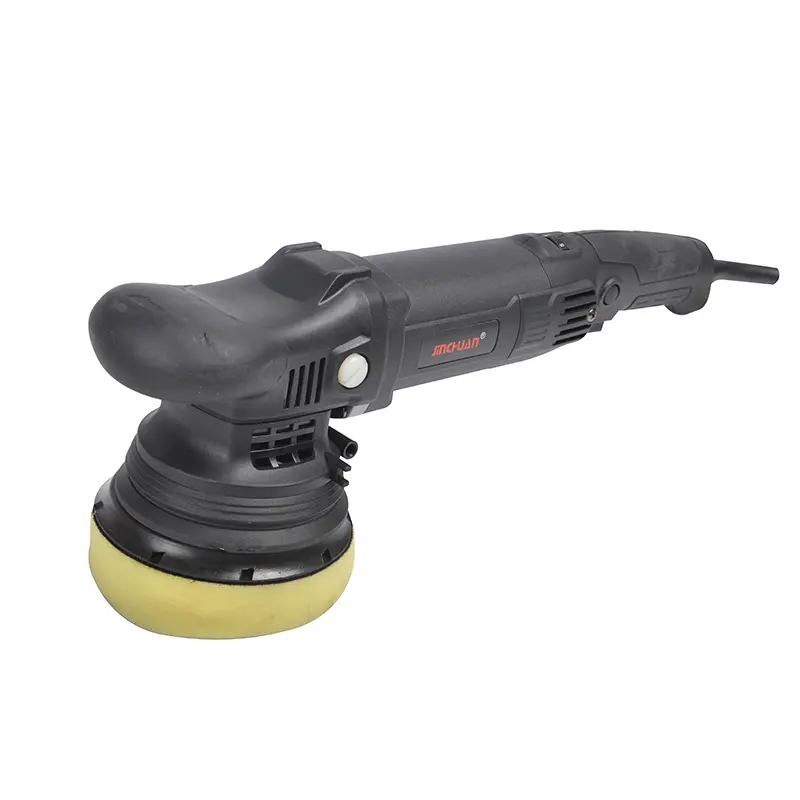
The problem with traditional rotary polishing machines lies in the predictable trajectory – abrasive particles always move along a fixed circular path, leaving regular fine marks on the surface of aluminum alloys or stainless steel, especially on matte surfaces after anodizing, where these marks are particularly glaring under specific light conditions. The ingenuity of the random track polishing machine lies in its ability to make the polishing disc perform random eccentric swinging while rotating on its own axis, thus transforming the grinding path into a chaotic state. This “unconscious” movement disrupts the continuity of the scratches. Even if there are fine marks, they are distributed discretely and are more easily absorbed visually by the texture of the material.
However, the equipment principle only solves half of the problem. The complexity of high-end electronic product shells lies in the material mix and match: the headband of headphones may be 7-series aluminum alloy, and the cover plate of the ear cups is a decorative piece inside the glass film. The middle frame of the watch is made of 316L stainless steel, but the crown is coated with PVD. Each workpiece is a complex of material combinations, and the polishing strategy must be dynamically adjusted along with the material switch.
Material cognition: The “temperament” of different substrates must be thoroughly understood
Aluminum alloy casings are the most vulnerable to accidental damage. The thickness of the anodic oxide layer is usually between 10 and 20 microns. If excessive pressure is applied during polishing or the grinding agent is too coarse, it is very easy to penetrate the oxide layer and expose the base color, forming irreversible white spots. My experience is that for oxidized aluminum parts, first manually remove the obvious knife marks with sandpaper of 3000 mesh or above, then use a polishing machine with a polyurethane sponge pad, with the speed controlled within 2000 revolutions per minute, and select an alumina suspension with a particle size of 1-3 microns as the grinding liquid. The advantage of doing this is that the elastic cushioning of the sponge pad can absorb the pressure fluctuations on the operator’s hand, avoiding local over-throwing caused by rigid contact.
The challenge of stainless steel watch cases lies in the restoration of the brushed texture. Many high-end watches feature a horizontal brushed finish with high-gloss polishing on the edges. This contrast texture is most likely to be damaged during rework. When processing such workpieces with a random track polishing machine, the trick is to provide shielding protection. Cover the brushed area completely with 3M 218 tape, exposing only the bright edges that need polishing. The polishing disc is made of a mixed material of wool and chemical fiber, with a rotational speed that can be increased to 3500 revolutions per minute. Combined with green wax (chromium oxide grinding paste), it can achieve rapid polishing. The key lies in that the polishing action must move linearly along the wire drawing direction and cannot rotate in place; otherwise, the boundary of the polishing area will present an unsightly transition zone.
Titanium alloy materials are increasingly being used at the hinge of headphones. Titanium has poor thermal conductivity. Heat accumulation in the polishing area can cause surface oxidation and discoloration, presenting unsightly rainbow patterns. The countermeasure is the low-temperature polishing process: use a cooling grinding fluid containing alcohol, and force the polishing disc to pause for cooling every 30 seconds of operation, or adopt a touch operation – the polishing disc gently touches the workpiece for 1 second and then lifts, repeating this process multiple times. Although this method is inefficient, it can preserve the original color of the material.
The philosophy of pairing abrasives with polishing pads
The core of anti-scratch is to keep the cutting force of the grinding particles always lower than the surface strength of the material. Many operators think that the finer the grinding agent, the better. In fact, this is not the case. For the tool marks after CNC machining, directly using ultrafine grinding agents will prolong the working hours and instead increase the risk of accidental scratches. The correct approach is to progress step by step:
In the rough polishing stage, sponge pads and 9-micron silicon carbide grinding fluid are selected. The purpose is to level the surface and eliminate processing marks. At this stage, the rotational speed should be low (1500 revolutions per minute), and the pressure should be light (the weight of the workpiece itself is sufficient). The key point is to ensure that the grinding particles are evenly cut. I have seen factories replace manual labor with automatic pressure arms. It seems advanced, but in fact, it loses the finger’s perception and feedback on the surface condition of the workpiece. When encountering hard points, it cannot be adjusted in time, and instead, defective products occur frequently.
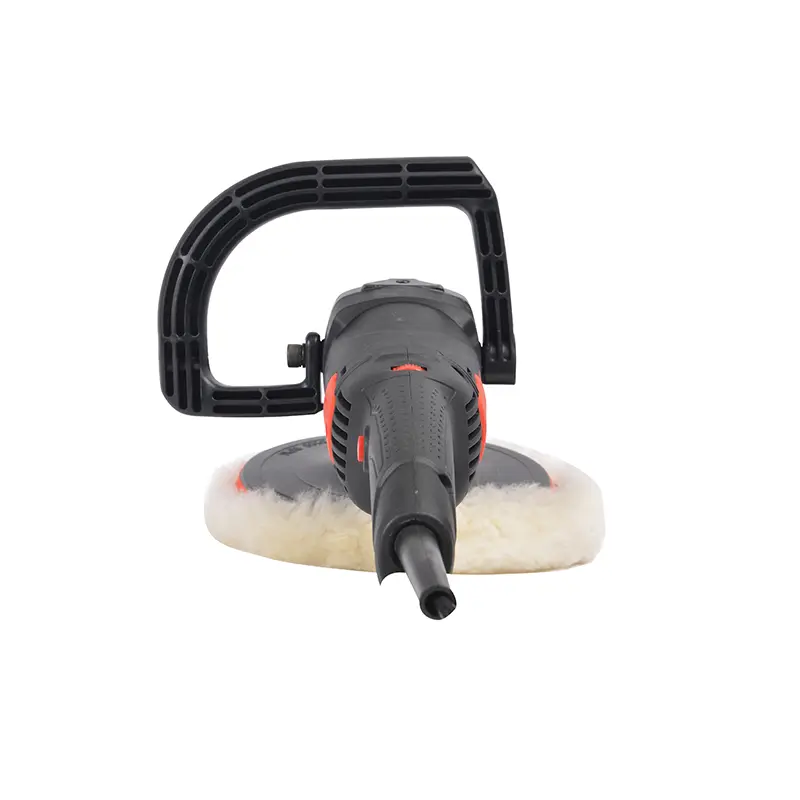
Replace the medium polishing with a wool pad and 3-micron diamond grinding paste to enhance the surface flatness. The wool pad has strong adhesion and can evenly spread the grinding paste. However, its drawback is that it is prone to trapping particles. Before each use, it must be thoroughly cleaned with an air gun. There is a detail: When the wool pad gets old, it will become hard. At this time, its cutting force will increase instead, and it is easy to scratch white marks on the surface of the anode layer. Our approach is to replace the gasket every 50 pieces polished. Although the cost is high, the yield rate can remain stable at over 98%.
During the fine polishing stage, a microfiber cloth pad and a 1-micron alumina polishing liquid are used. The aim is to eliminate the foggy effect and achieve a mirror-like finish. At this stage, over-polishing is the most undesirable. This is because the chaotic motion of the random track polishing machine still has cutting force at the microscopic level. If it persists for too long, orange peel patterns will occur. My criterion for judgment is: observe the reflection on the surface of the workpiece. Stop immediately when the outline of the reflected LED tube is clear and there is no deformation.
Overlooked environmental factors: Dust is the greatest enemy
The cleanliness of the polishing workshop directly determines the yield rate. When the random track polishing machine is in operation, it generates static electricity, which can attract particles larger than 5 microns suspended in the air. These hard dots roll between the polishing pad and the workpiece, causing comet-like scratches. The solution is not as luxurious as building a clean room, but rather controlling the local micro-environment:
Install an FFU fan filter unit above the polishing station to form a vertical laminar flow and blow the dust away from the source. The polishing machine itself is grounded to eliminate static electricity adsorption. Before polishing, the workpiece is blown clean with an ion air gun. This is more effective than compressed air because the ion air can neutralize the static electricity on the surface and allow the fine dust to fall off naturally. Our data shows that after taking these measures, complaints about scratches of unknown cause have decreased by 70%.
Another hidden killer is the crystallization of grinding fluid. A lot of water-based grinding fluids will precipitate hard lumps at the edge of the polishing disc after evaporation. When used next time, these lumps will cut the workpiece just like a grinding wheel. After each polishing, the polishing pad should be rinsed with pure water and allowed to dry naturally in the shade. Under no circumstances should a hot air gun be used to accelerate the drying process, as high temperatures will cause the pad material to age and harden.
Dynamic balancing technique of process parameters
The parameter tables on paper are all static, but in actual operation, fine-tuning by hand is required. For irregular-shaped parts like the earphone casing, the junction where the curved surface meets the flat surface is the most likely to be punctured. My technique is: on a flat surface, use normal speed and pressure. When entering a curved surface, actively reduce the speed by 500 revolutions. At the same time, hold the workpiece tightly with your fingers to increase the counterweight, so that the centrifugal force of the polishing disc does not throw the workpiece away. This state of “using both hands and brain” requires at least three months of training to form muscle memory.
There is no uniform standard for pressure control, but there is a mental rule: listen to the sound. When the polishing pad is in good contact with the workpiece, it will produce a continuous and uniform “hissing” sound. If the pressure is too high and the sound becomes dull, it indicates that the grinding particles have been crushed and the cutting force has decreased. If the pressure is too low, the sound will be shrill, which is a sign that the disc is spinning idly. An experienced master can judge the yield rate just by listening to the sound.
Reverse thinking in the quality inspection process
Don’t wait until you’ve thrown everything away to conduct a full inspection. That’s like mending the fence after the sheep are lost. The correct approach is to conduct three pause checks during the polishing process: after the first rough polishing, use a 10x magnifying glass to check if there are any remaining CNC tool marks. After the second medium throw, shine monochromatic light on it to check the surface flatness. Before the third fine polishing, wipe with a solvent to observe if there is any false appearance caused by residual grinding fluid. This kind of segmented quality inspection can detect problems early and prevent the entire piece from being scrapped.
For high-value workpieces like watch cases, it is recommended to introduce a surface roughness meter for data-driven control. The Ra value is controlled below 0.04 microns, and the Rz value does not exceed 0.3 microns. These quantitative indicators are more reliable than the “feel” of an experienced master and also make it easier to prove the craftsmanship to customers.
Written at the end
The random track polishing machine itself is merely a tool. The true anti-scratch technique lies in a comprehensive understanding of materials, consumables, environment and parameters. The ultimate pursuit of polishing the shells of high-end electronic products is to make the surface treatment marks disappear in the language of the material itself – aluminum alloy should have a warm matte finish, stainless steel should have a sharp edge, and titanium alloy should retain its understated original color. When your polishing process can achieve the effect of “nourishing things imperceptibly”, B2B customers will naturally realize that what you offer is not processing services but quality assurance. The next time they send samples, you might as well ask one more question: What mood do you ultimately want to convey on this surface? When a technical dialogue escalates to a value dialogue, the value of an order will be completely different.
Post time: Dec-10-2025