
230mm Professional Trigger Angle Grinder Buying Guide for Supermarkets: How to Choose Cost-Effective Models?
Introduction
Choosing a cost-effective 230mm professional trigger angle grinder for your hardware section or professional tool shelves is a tricky balancing act for every supermarket purchasing manager. If you push the purchase price too low, the products you receive will be unreliable, leading to constant maintenance complaints and damaged brand reputation; if you only focus on international big brands, the profit margin will be extremely thin, leaving you with no price competitiveness against local building materials markets and e-commerce impacts. What you need is not just a “functional” machine, but a “core product” that professional workers can trust, has a high repurchase rate, and brings you considerable profits within limited shelf space and purchasing budget. This article will break down the core value composition of a professional angle grinder, teach you to understand the secrets behind specifications and parameters, avoid common pitfalls in product selection, and finally establish a replicable evaluation system, ensuring every order you place is accurate, secure, and profitable.
Core Content
1. Power and Torque: How to Interpret the Gap Between “Input Power” and “Actual Cutting Force”?
When you face a pile of product catalogs marked with “2000W” and “2400W”, your first intuition may be that the higher the power, the better. But in the world of professional angle grinders, only looking at the input power number is a dangerous misunderstanding — the real key lies in “output torque” and the “sustainability” of power.
Input power is the electrical energy consumed by the motor, while output torque is the “force” that is ultimately transmitted to the grinding wheel or cutting disc. A poorly designed 2400W angle grinder may have lower actual cutting force than a well-designed 2200W machine, because its energy is lost to heat and internal friction. Here, you need to pay attention to a key industry indicator — the efficiency ratio of “output power/input power”. High-quality professional machines usually have an efficiency close to or exceeding 50%, while many cheap machines may only have an efficiency of just over 40%. This means that with the same nominal 2400W, the former can stably output more than 1200W of mechanical energy, while the latter may barely reach 1000W. You can test it by letting the machine work continuously for one minute under rated load (such as cutting thick angle steel with a new cutting disc) and feel if the speed drops significantly. A stable speed indicates sufficient torque.
Industry Case & Data
A large hardware chain supermarket in Southeast Asia once conducted an internal test: they purchased four different brands of angle grinders with similar nominal power (2200W-2400W) and had workers perform high-intensity metal cutting under the same conditions. The results showed that although the two international second-tier brand machines did not have the highest nominal power, their cutting efficiency (cutting length per unit time) and temperature rise control after continuous operation were significantly better than another “cost-effective” model with higher nominal power but lower price. In the end, they chose the former. Although the purchase price was 15% higher, the customer repair rate was reduced by 70%, and the long-term benefits brought by repurchase rate and word of mouth far exceeded the price difference.
Common User Questions & Answers
Q: Many products emphasize “no-load speed” — is a higher number always better? A: Not necessarily. A high no-load speed only means the motor can run fast when “idling”. The key is to look at the “load speed drop rate”, that is, how much the speed can be maintained after adding actual cutting pressure. An excellent professional machine has a strong torque reserve in its motor and gear transmission system, with a gentle speed drop under heavy pressure and no jamming during cutting. However, when a cheap machine encounters hard materials, the speed drops sharply — it not only cannot cut, but the motor is also prone to overheating and burning. Therefore, a high and stable load speed is much more important than a simple high no-load speed.
2. Motor and Heat Dissipation: Is a Brushless Motor a Must-Have? How to Judge the Reliability of the Heat Dissipation System?
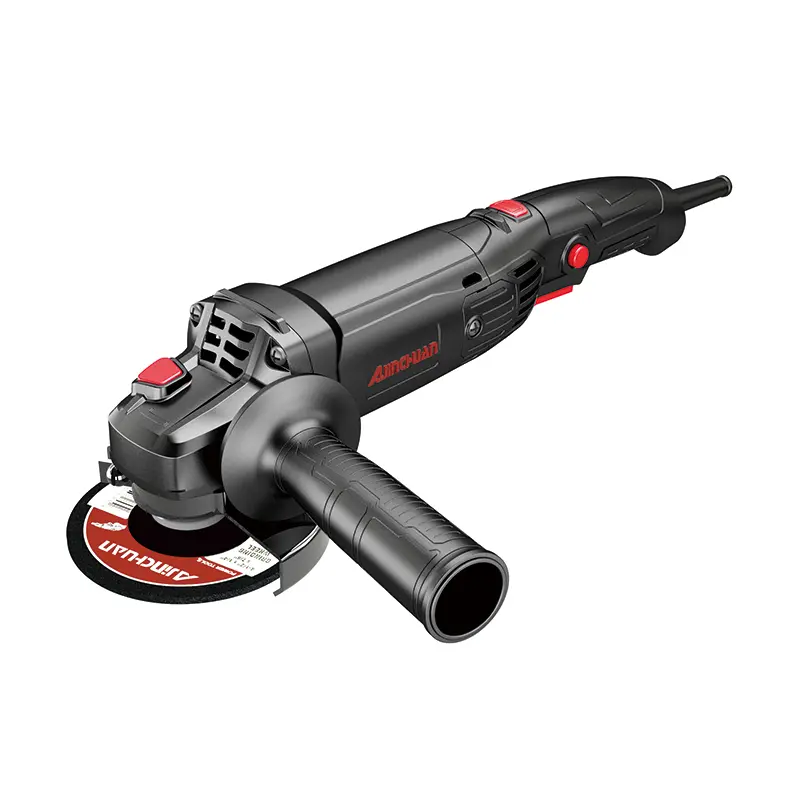
In recent years, “brushless motors” have become very popular in the power tool industry. For a “power-hungry” 230mm angle grinder, is it a must-have for purchasing? The answer is: for professional applications pursuing extreme durability and low maintenance costs, yes, it is becoming more and more important. Traditional brushed motors rely on contact between carbon brushes and commutators for conduction. After long-term high-load operation, the carbon brushes will wear out and need to be replaced, and they will generate sparks and electromagnetic interference. Brushless motors commutate through electronic controllers, without physical friction points, resulting in longer service life, higher efficiency, and quieter operation.
However, please note that a mature and reliable brushless motor system costs much more than an ordinary brushed motor. If the price of the “brushless” angle grinder you purchase is only slightly higher than that of the same-level brushed model, you must be highly vigilant about whether the materials and heat dissipation design of its internal electronic control unit (ECU) are cut corners. A low-quality controller may be far less reliable than a simple brushed motor. Therefore, if the budget is limited, choosing a brushed motor model with high-quality pure copper wire and excellent heat dissipation duct design is far more reliable than choosing a cheap brushless solution.
Common User Questions & Answers
Q: Besides looking at the fan size, how to quickly judge if the heat dissipation design of an angle grinder is up to standard? A: There are two simple methods. First, feel the shell design. The shell of a professional machine (especially the motor head and gearbox part) usually has a lot of reinforcing ribs, which are not only for anti-fall, but also to increase the heat dissipation area. Cheap plastic shells are often smooth and thin. Second, listen to and feel the air outlet. After running the machine at high load for one or two minutes, use your hand to feel the air outlet at the back of the machine to see if the air volume is large and concentrated. At the same time, listen to the motor sound — a high-quality motor still has a thick and uniform sound under high load, while a machine with poor heat dissipation will have a sharp and dry sound, which is a sign of internal heat accumulation and deteriorated lubrication. Long-term overheating is the main cause of motor burnout.
3. Gearbox and Safety: Are Metal Gears and Debris Shields a Cost or a Necessary Investment?
When you evaluate the cost of a 230mm professional trigger angle grinder, the materials used in the gearbox and protection system are the key dividing line between “industrial-grade” and “falsely marked-grade”. Although this part seems like a “hidden cost”, it is directly related to the core service life of the tool and the personal safety of the user.
First, let’s talk about the gearbox. A 230mm large angle grinder has huge output torque, and the internal transmission gears bear amazing impact force. A professional gearbox will use quenched and hardened alloy steel gears and be filled with high-quality grease. When selecting products, you can directly ask the supplier about the material and heat treatment process of the gears. Cheap powder metallurgy gears or ordinary steel gears are prone to tooth breakage or severe wear under the impact load of continuous cutting or grinding, leading to the scrapping of the entire machine. This is not an exaggeration — on some construction sites, cheap angle grinders eliminated due to gearbox damage are common.
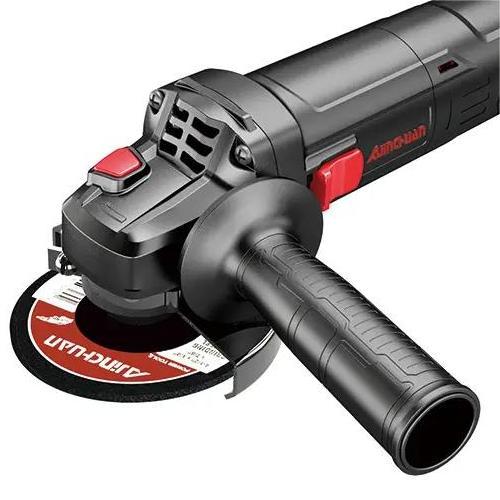
Now, let’s talk about safety. A sturdy, flexible-adjustable, lockable debris shield is not a decoration, but a life-saving device. Professional workers all know that when a grinding wheel or cutting disc breaks at high speed, the debris is like bullets. High-quality shields are usually made of thick steel or high-strength composite materials, with firm adjustment buckles that can effectively deflect debris. However, the shields of cheap machines are often as thin as iron sheets, with loose buckles, which are useless. Providing safe and reliable tools for your customers is not only a legal responsibility, but also the foundation of your business reputation.
4. Purchasing Practice: How to Establish a “Value List” and Get Out of the Mire of Low-Price Competition?
Finally, we integrate all these technical details into a “230mm angle grinder product selection value evaluation list” tailored for supermarket purchasing managers like you. With this list to negotiate with suppliers, you will shift from passive price comparison to active value definition.
This list should include four core dimensions, each with a weight (for example, performance reliability accounts for 40%, safety accounts for 25%, long-term use cost accounts for 20%, and channel support and service account for 15%):
- Core Performance Test Report: Require suppliers to provide key performance test reports (such as load speed, temperature rise, noise, vibration) issued by third-party laboratories (such as Intertek, SGS), not just specification sheets.
- Key Component Material List: Clearly list the specific information of gears (material/heat treatment), bearings (brand), commutators (for brushed motors), and switches (brand/rated current). Manufacturers that dare to use “pure copper wire”, “alloy steel gears”, and “brand bearings” as selling points are usually more confident.
- Safety and Certification: Confirm that the product has complete safety certifications required for the target market (such as CE, EMC, RoHS, etc.), and check whether safety functions such as debris shields, self-locking trigger switches, and electric brakes (if any) are reliable.
- After-Sales Service and Accessory Compatibility: Inquire about the supply and price of common wearing parts (such as carbon brushes, gears, bearings). A supplier that can provide genuine accessories stably, long-term, and at a reasonable price can greatly extend the service life of the tools you sell and improve customer satisfaction.
When you use this set of standards to measure, you will find that the model that is 30% more expensive than the cheapest one, but has solid materials, reliable test reports, and professional after-sales support, is the real “cost-effective 230mm professional trigger angle grinder”. What it brings you is fewer after-sales troubles, higher customer loyalty, and the long-term vitality of the hardware tool section as a profit center.
FAQ: Frequently Asked Questions
- Q1: When facing end consumers, should we recommend 230mm angle grinders with brushed or brushless motors? A: It depends on the consumer’s usage frequency and professional level. For professional metal processing, construction, or rescue personnel who use it for several hours a day, brushless motor models are the first choice. Their advantages of long service life, maintenance-free (no need to replace carbon brushes), and high efficiency are very obvious under heavy use, with lower total cost of ownership. For senior DIY users or small workshops who use it several times a week, a high-quality brushed motor model is a more economical and practical choice, but users should be informed to regularly check and replace carbon brushes. For ordinary users who use it occasionally, the 230mm model may be too powerful, and the 180mm model is more recommended.
- Q2: How to judge if the “high-power” angle grinder provided by the supplier is falsely marked? A: There are several practical tips: First, weigh the weight. With similar volume, a machine with truly high power has more materials in its motor stator and rotor, and the overall weight will be significantly heavier (a high-quality 2400W model usually has a net weight of about 5-5.5kg). Shoddy “bloated” machines often feel light. Second, check the power cord specification. A machine marked with 2400W should have a power cord cross-sectional area of at least 3×1.0mm², or even 3×1.5mm², to ensure no overheating when large current passes through. If the wire is very thin, its nominal power is definitely questionable. Third, check the certification nameplate. The nameplate of a regular product will clearly mark the rated input power, voltage, current, and other information, and comply with relevant safety standards.
- Q3: For supermarket purchasing, should we choose multiple tools from one brand, or select advantageous brands in their respective fields for different categories? A: There is no absolute answer, but an efficient strategy is “main brand + advantageous category supplement”. Establish 1-2 reputable brands with complete product lines and guaranteed after-sales service as the “main brands” of your hardware tool section, and conduct in-depth cooperation. This is conducive to inventory management, promotional linkage, and establishing a professional image. At the same time, for some highly professional niche categories (for example, some brands are particularly excellent in angle grinders but average in electric drills), you can break brand restrictions and introduce “star products” in this field as supplements. This not only ensures overall professionalism but also meets the performance pursuit of high-end customers for specific tools.
Meta Description
Looking for a truly durable and safe 230mm large angle grinder for your chain supermarket? This guide starts from actual combat, reveals the trap of false power marking, analyzes the choice between brushless/brushed motors, breaks down gearbox and safety design, and provides a purchasing value evaluation list. Read now to master professional product selection methods, get rid of low-price competition, and improve the profit and reputation of your tool category.
Keywords
230mm angle grinder purchasing, professional angle grinder selection, cost-effective power tools, supermarket tool purchasing guide, brushless angle grinder advantages
Post time: Mar-17-2026