
Attention Southeast Asian Buyers: How to Choose Power & Speed for 180mm Trigger Grip Angle Grinders?
Fellow workers in Southeast Asia, have you ever worried about your ongoing projects? Concrete pouring surfaces need to be polished smooth, stainless steel welds must be cleaned thoroughly, and stone cutting requires a smooth cross-section. As soon as you start using the tool, either the machine overheats and shuts down, or the cut edges are chipped and rough—delaying the construction period and eroding profits. The problem often lies in choosing the wrong “weapon”—have you really selected the right power and speed for your most commonly used 180mm trigger grip angle grinder?
This article is here to clear up the confusion for you. We won’t talk about empty theories; we’ll directly tell you how these two core parameters—power and speed—affect actual work efficiency, worker safety, and your procurement costs. After reading, you’ll know how to accurately match the most suitable tool for different project scenarios when placing your next order, so that workers won’t complain and your money won’t be wasted. Next, we’ll start by breaking down the most critical “source of power”—input power.
I. Input Power: Is Higher Really Better? Watch Out for the “False Labeling” Trap
When choosing an angle grinder, many people first fix their eyes on the big numbers like “2000W” or “2400W”, thinking that the larger the number, the more powerful the machine. This idea is half correct. Power does determine the “foundation” of the machine. A motor with higher power is less likely to overheat and lose speed when dealing with high-hardness materials (such as granite, high-grade concrete) or long-term continuous operation, thus ensuring the efficiency of cutting and polishing.
But there’s an industry “pitfall” you need to avoid: input power is not equal to output power. Some manufacturers deliberately inflate the input power value, but the motor conversion efficiency is low, so the actual power transmitted to the cutting disc (output power) is greatly reduced. It’s like a car with a large engine displacement but a poor gearbox—it still lacks power when driving. In 2024, a medium-sized building materials processing factory in Vietnam purchased 50 angle grinders labeled 2200W at one time for outdoor stone processing. However, when workers were cutting 2cm thick granite, they generally reported that the machine was “sluggish”, cutting was slow, and it became too hot to hold after half an hour. After testing, the actual effective output power of these machines was on average less than 65% of the labeled value, and there were problems with both motor efficiency and heat dissipation design.
So, how to judge when purchasing?
Don’t just look at the numbers on paper. First, ask the manufacturer about the approximate range of the motor’s “full-load efficiency”—high-quality brushed motors can usually achieve more than 75%. Second, if possible, ask the supplier to provide a “load speed drop” test video—that is, the extent to which the machine’s speed drops when standard cutting resistance is applied. The smaller the drop, the more “real power” the motor has and the stronger its overload capacity. Remember, a 1800W machine with stable actual output is far more reliable than a “bloated” 2200W machine.
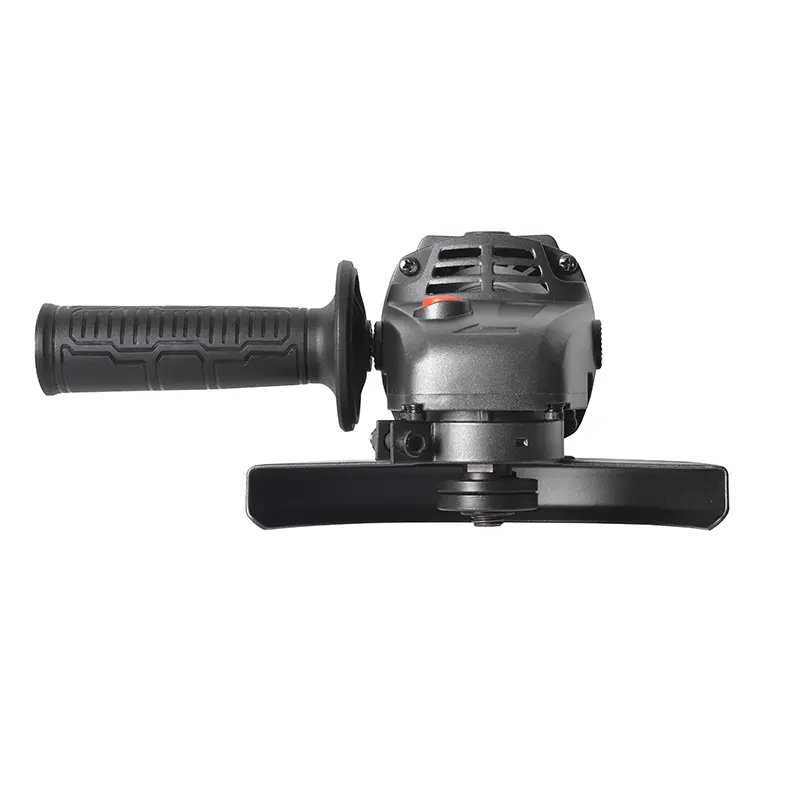
II. No-Load Speed: Not Faster Is Better, the Key Is “Matching”
Once you’re sure the machine has enough “power”, the next step is to look at its “working speed”, which is the no-load speed, measured in revolutions per minute (RPM). The common speed range of 180mm angle grinders is 6000-8500 RPM. The higher the speed, the faster the linear speed of the cutting disc, and theoretically, the sharper the cutting. But the biggest misunderstanding here is blindly pursuing high speed.
The core principle is: the speed must be strictly matched with the type of cutting disc and safety specifications. Every cutting/polishing disc is marked with a “maximum operating speed” when it leaves the factory. For example, an ordinary 180mm resin cutting disc may have a maximum safe speed marked as 80m/s (about 8500 RPM). If the no-load speed of your angle grinder is 9000 RPM, then during actual operation, the cutting disc is at risk of overspeeding and bursting, and flying debris will be a fatal safety accident. This is not an exaggeration. At a construction site in the Philippines, a serious work-related injury occurred because workers mistakenly used a high-speed machine with a low-grade grinding wheel, and both the project party and the tool supplier paid a heavy price.
So, how to match for common operating scenarios in Southeast Asia?
Metal Cutting and Rust Removal: This is the most common use. It is recommended to choose models with a speed between 7500-8500 RPM. This speed range can not only ensure cutting efficiency but also be widely compatible with most fiber-reinforced resin cutting discs and wire wheels on the market for efficient rust removal and polishing.
Stone and Concrete Cutting: Cutting such materials is prone to dust, which is a test for the machine’s heat dissipation and dust prevention. The recommended speed is 6500-7500 RPM. A slightly lower speed helps reduce saw blade vibration, obtain a flatter cutting surface, and better match diamond saw blades to extend their service life. Many professional stone installation teams in Thailand specially configure machines with this speed range for stone work.
Polishing and Fine Grinding: If the angle grinders you purchase also need to be used for polishing metal or wood, then speed controllability is very important. Choose models with adjustable speed (such as 5000-8000 RPM adjustable), which allows workers to flexibly adjust as needed during polishing, avoiding burning the surface of the workpiece due to excessive speed.
III. The “Golden Combination” of Power and Speed: How to Balance Efficiency and Durability?
Looking at power or speed alone is not enough. Smart buyers should learn to look at their “combination”. An excellent 180mm angle grinder’s power and speed matching is to achieve the best balance between efficiency, controllability, and tool life.
High power (such as above 2000W) combined with medium speed (about 7500 RPM) is a “golden combination” favored by the professional market. It means the motor has sufficient torque reserve. When the cutting disc’s depth increases and resistance strengthens, the machine can maintain speed without serious attenuation, thus maintaining efficient cutting. On the contrary, a machine with high speed but low power will have a sharp drop in speed when encountering resistance, cutting will become extremely slow, and the motor will overheat seriously due to long-term overload, greatly shortening its service life.
A Real Case from an Indonesian Distributor:
This distributor mainly serves local shipyards and metal processing plants. Previously, he mainly promoted a model with 8500 RPM and 1800W. Although it was fast when cutting lightweight metal sheets, customers reported that the machine was prone to jamming when cutting thick I-beams or handling a large number of welding scars. Later, he switched to promoting a model with 8000 RPM and 2200W. The initial purchase unit price increased slightly, but the customer repurchase rate increased significantly. The shipyard foreman said that the new machine was “more resilient”, could cut continuously for a whole day, the hand feel was still stable, and the replacement cycle of carbon brushes and gears was significantly extended. This case shows that for B-end customers, the long-term reliability of the tool and the total cost of ownership (TCO) are far more important than the slight difference in the initial purchase price.
Common User Question: Since the high-power and medium-speed combination is so good, why aren’t all machines designed this way?
This involves a trade-off between cost, weight, and applicability. Ultra-high power means a larger motor, more solid gears, and a stronger heat dissipation system, which will increase material costs and the overall weight of the machine. For end consumers who only need light, intermittent operation or certain specific processes, a lighter, lower-priced model may be more cost-effective. Therefore, as a buyer, you need to “layer” your product selection according to the mainstream operation intensity of your downstream customers and establish product lines of different grades.
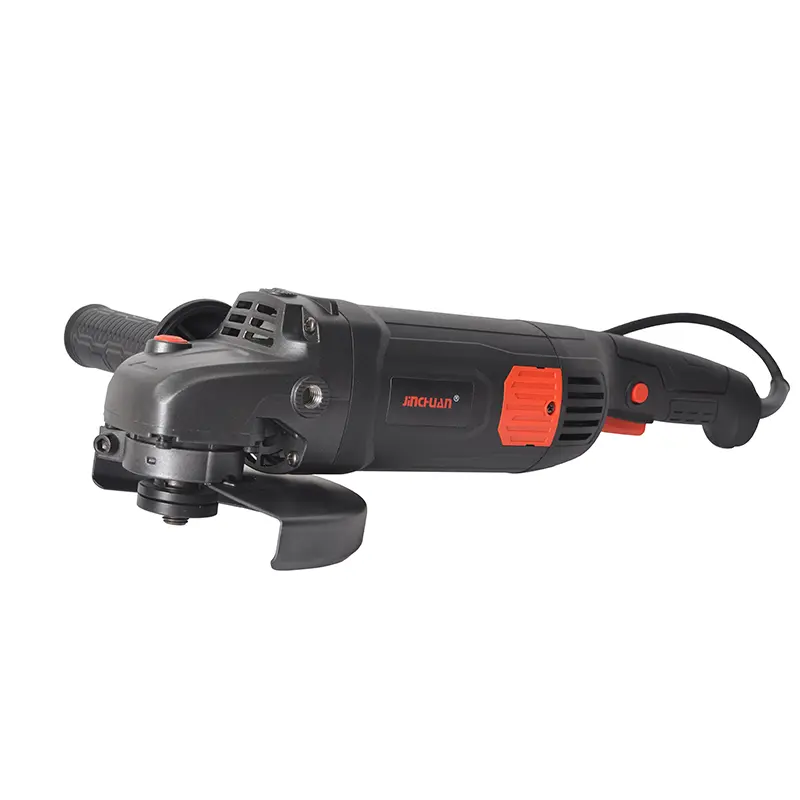
IV. Beyond Parameters: These Practical Details Determine Procurement Success or Failure
After locking in the approximate range of power and speed, before placing the final order, there are several practical details that must be confirmed. They are directly related to workers’ willingness to use and the product’s market reputation.
Heat Dissipation and Protection: The climate in Southeast Asia is hot and humid, so machine heat dissipation is crucial. Pay attention to the design of the heat dissipation air duct on the motor housing; it is best to have a basic dust screen for the air inlet to prevent a large amount of dust from being sucked into the motor. Good heat dissipation can directly protect the motor windings and prevent burnout due to overheating.
Switch and Grip: The core of the trigger grip is operational flexibility. Check if the switch feels smooth and has no jamming. Is the rubber material of the handle hard or soft? In hot, sweaty environments, soft non-slip rubber can greatly improve grip safety and comfort, reducing fatigue.
Maintenance Convenience: Ask if carbon brush replacement is convenient (whether there is an external accessible window) and if the gearbox is easy to maintain and refuel. Easy-to-maintain design can greatly extend the service life of the machine, which is an important plus in the professional field. You can ask the supplier: “Do I need to take apart the entire back cover to replace the carbon brushes of this machine?”
Finally, your procurement advice is: evaluate the tool in the specific construction scenario. When you inspect a 180mm trigger grip angle grinder, don’t just think of it as “an angle grinder”, but imagine it as a Vietnamese worker cutting stainless steel pipes in a stuffy workshop, a Thai construction site chiseling concrete walls in dusty conditions, or a Philippine worker polishing hull welds outside a work shed. Can its power support half a day of high-intensity operation? Is its speed safe and controllable in that environment? Is it durable enough to make your customers willing to buy from you again? If you figure out these questions, your choice will not be wrong.
In summary, when purchasing 180mm trigger grip angle grinders for the Southeast Asian market, it is a misunderstanding to blindly pursue a single high parameter. Priority should be given to a reliable combination of medium to high power (to ensure continuous output) and appropriate speed (to ensure safety and efficiency matching), and strictly check heat dissipation, protection, and craftsmanship details. Only in this way can you select a “profit tool” that can improve construction site efficiency, stand the test of time, and truly win repeat customers for you.
FAQ (Common Industry Questions)
Q1: Angle grinders with the same labeled power have a huge price difference—where is the main difference?
A1: The core differences lie in the motor (copper wire material, winding process, silicon steel sheet quality), gears (steel strength and heat treatment process), bearings (precision and brand), and shell material (impact resistance). Cheap products usually drastically cut costs in internal materials and processes, leading to insufficient actual output power, easy overheating, and short service life. When purchasing, do not only compare parameters; pay attention to brand reputation, test data provided by the supplier, or the actual performance of sample tests.
Q2: Is a brushless motor angle grinder more worth purchasing?
A2: Brushless motors have significant advantages of long service life, maintenance-free (no need to replace carbon brushes), high efficiency, and energy saving, making them especially suitable for industrial scenarios with high intensity and long-term continuous operation. However, their procurement cost is also significantly higher than that of brushed motor models. If your target customers are the price-sensitive DIY market, brushed models are still the mainstream. If you target B-end customers such as professional factories and shipyards, introducing high-end brushless models as a flagship product line can effectively enhance your professional image and profit margin.
Q3: How to explain to end users that higher speed does not mean faster cutting?
A3: You can use a simple analogy: “It’s like driving a car—you can’t drive fast just by stepping on the gas pedal (high speed) all the time. When going uphill (high cutting resistance), if the engine has no power (insufficient power/torque), the speed will drop even if you step on the gas hard, and the car is also prone to breakdown. Our machine matches the most suitable and safest speed (rotational speed) on the basis of ensuring the engine has enough power (sufficient power), so that running long distances (continuous operation) is both fast and stable.” At the same time, it is necessary to repeatedly emphasize safety—any operation exceeding the rated speed of the abrasive tool is extremely dangerous.
Meta Description
How can Southeast Asian buyers choose the most suitable 180mm trigger grip angle grinder for their projects? This article avoids parameter traps, deeply analyzes the real matching logic of power and speed, and combines the actual situation of Southeast Asian construction sites to teach you to balance efficiency, safety and durability, make wise procurement decisions, and improve customer satisfaction and repurchase rate. Read now to get a professional selection guide.
Keywords
180mm angle grinder selection, trigger grip angle grinder, angle grinder power and speed, Southeast Asia tool procurement, power tool selection guide
Post time: Mar-19-2026