
Casting and Die-Casting Processes: The Relationship Between Manufacturing Methods and Strength in Angle Grinder Housings
Casting and die-casting processes play a decisive role in the strength of angle grinder housings, which is also a core pain point in procurement and selection within the power tool industry. Many cross-border buyers and B2B clients have encountered this issue: angle grinders with cast housings are cheaper but prone to cracking; while die-cast models carry higher costs without clear strength advantages. End-users frequently face safety hazards like housing deformation during operation due to insufficient strength. After reading this article, you will fully grasp the core differences between these two processes, understand their logical connection to housing strength, master selection techniques for different scenarios, and avoid common cross-border procurement pitfalls. Next, we’ll dissect the core secrets of angle grinder housing manufacturing through dimensions like process principles, strength comparisons, and operational suitability.
I. Casting vs. Die Casting: What Are the Core Differences Between These Two Processes?
The manufacturing process of angle grinder housings directly determines their structural density and strength.
Though both casting and die casting are metal forming processes, their principles, equipment, and finished product characteristics differ significantly.
Industry Data: According to a 2024 survey by the Power Tool Industry Association, housing-related issues account for 38% of angle grinder failures. Among these, cracks in cast housings constitute 72% of failures, while die-cast housings only account for 28%.
Casting Process: Molten metal is poured into sand molds and allowed to cool naturally.
Advantages include low mold costs and suitability for complex shapes; disadvantages involve susceptibility to internal porosity after forming.
Such porosity reduces housing density, directly compromising strength.
Die Casting Process: Molten metal is rapidly injected under high pressure into metal molds and cooled to form the part.
Advantages include high forming density, precision, and uniform internal structure; disadvantages involve high mold costs.
Real-world example: A domestic power tool manufacturer conducted comparative tests. For angle grinder housings made from identical aluminum alloy material, the cast housing exhibited a tensile strength of 180 MPa, while the die-cast housing achieved 240 MPa—a 33% strength increase.
Common user question: Can angle grinder housings from these two processes be visually distinguished?
They can be preliminarily differentiated. Cast housings exhibit rough surfaces with prone-to-burrs edges.
Die-cast housings feature smooth surfaces, high precision, and burr-free edges. When tapped, die-cast housings produce a crisp sound, while cast housings yield a duller tone.
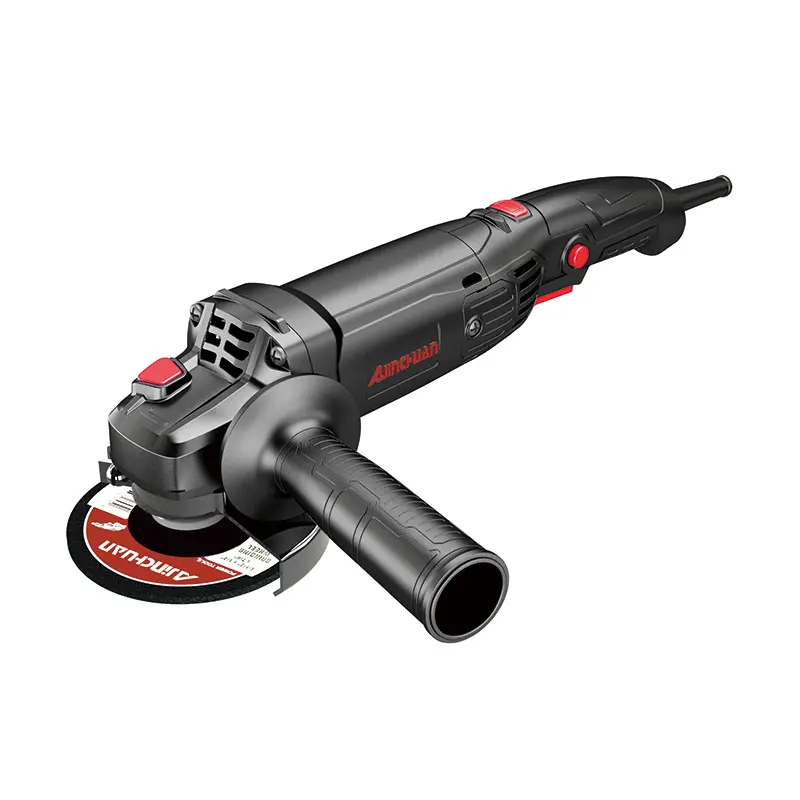
II. How Process Affects Strength: Core Logic of Angle Grinder Housing Strength
During operation, angle grinder housings endure high-frequency vibrations and instantaneous impact forces.
Housing strength depends not only on material but is primarily determined by the internal structure shaped by manufacturing processes.
Defects in casting: During natural cooling, metal is prone to shrinkage cavities and gas pores.
These defects act like “hidden voids,” becoming stress concentration points under load.
When subjected to high-intensity operational vibrations, cracks easily initiate from these points.
Advantages of die casting: High-pressure forming arranges metal molecules more densely, eliminating significant gas pores.
Rapid cooling further refines the metal grain structure, enhancing structural integrity.
Real-world case: A European construction company purchased two batches of identical angle grinders, one with cast housings and the other with die-cast housings. During high-intensity stone grinding operations, the cast-housed grinders exhibited housing cracks after an average of 230 hours of use. In contrast, the die-cast housings remained undamaged after 680 hours, demonstrating nearly double the service life.
Common User Question: How much more expensive is a die-cast housing compared to a cast one for the same material? Is it worth choosing?
The unit cost of a die-cast housing is 15%-25% higher than a cast one, but its overall cost of ownership is more favorable.
In high-intensity applications, a die-cast housing lasts 2-3 times longer than a cast one, while also reducing downtime losses caused by housing failures, offering better value for money.
III. How to Select Based on Different Scenarios? Compatibility Logic for Cast vs. Die-Cast Enclosures
Not all scenarios require die-cast enclosures; choosing the right process balances cost and performance.
Core selection logic: Precisely match based on operational intensity, usage frequency, and cost budget.
Cast enclosures suit: Light-duty operations with low usage frequency.
Examples: Home DIY projects, occasional wood sanding—scenarios with low housing strength requirements.
Die-cast housing applications: High-intensity, high-frequency operation scenarios.
Examples: Construction sites, stone processing, industrial production line grinding—environments requiring sustained resistance to high-frequency vibrations.
Real-world case: Sales data from a domestic cross-border e-commerce platform shows that for angle grinders targeting professional construction teams in Europe and America, die-cast housing models achieved a 65% repurchase rate. Conversely, for household-oriented models, cast housings dominated 78% of sales due to their high cost-effectiveness.
Common user question: How to prevent cracking when choosing cast housings for light-duty applications?
Prioritize housings made from ductile iron or aluminum alloy, which offer higher strength than standard cast iron.
Avoid overloading during use—e.g., refrain from grinding excessively thick stone with small angle grinders. Conduct regular inspections for cracks and replace housings promptly if issues arise.
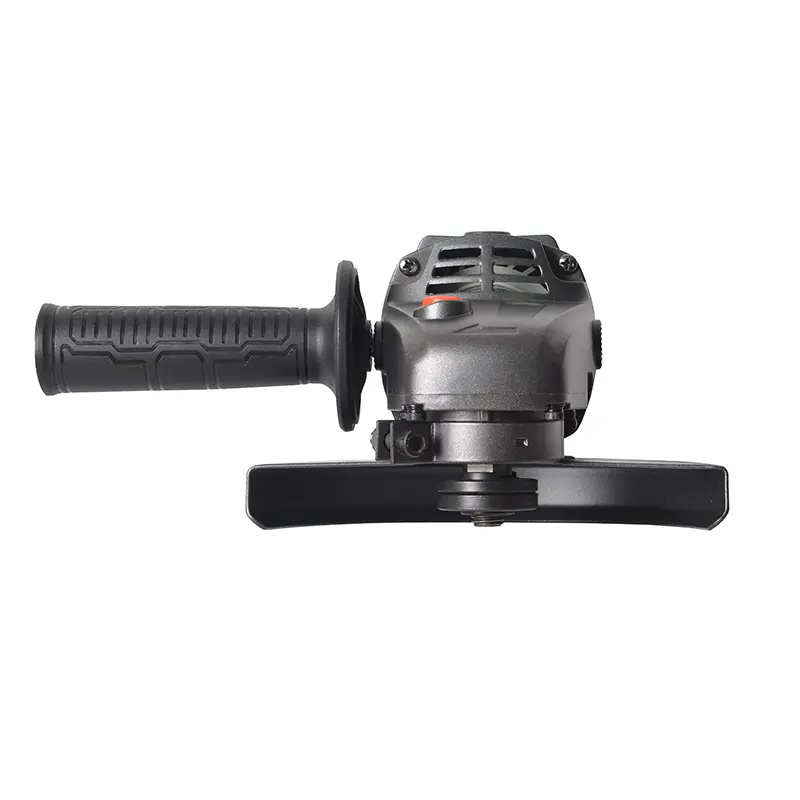
IV. Cross-Border Procurement Pitfalls: How to Assess Angle Grinder Housing Craftsmanship?
For cross-border buyers, housing quality directly impacts product reputation and after-sales costs.
Many buyers overlook manufacturing details, leading to unsold inventory or high after-sales claims in overseas markets.
Three core pitfall avoidance points: First, process verification—require suppliers to provide manufacturing inspection reports specifying whether casting or die-casting was used. Second, material testing—ensure aluminum alloy purity meets standards to prevent impurities from reducing strength. Third, compliance certification—products exported to Europe and America must meet CE and UL certifications to guarantee housing strength complies with safety standards.
Real-world case: A Guangdong-based cross-border buyer purchased angle grinders advertised as die-cast but actually produced via low-cost casting. After shipping to Europe, customers reported widespread casing cracks within one month of use, leading to product delisting and over $200,000 in losses. Switching to a reputable manufacturer that provided process inspection reports and CE certification reduced after-sales rates in Europe to below 3%.
Common User Query: How can one quickly verify if an angle grinder housing is die-cast during cross-border procurement?
Beyond inspecting surface precision, request suppliers to provide parameter reports specific to die-casting processes.
This includes data such as injection pressure and filling time. Alternatively, send samples to third-party testing agencies. Internal structural density analysis distinguishes die-cast housings, which exhibit significantly higher density than cast ones.
FAQ: Common Questions on Angle Grinder Housing Processes and Strength
Q1: Besides casting and die-casting, are there other processes for angle grinder housings?
A1: Stamping is another option, but it’s only suitable for thin, lightweight housings with lower strength.
Currently, casting and die-casting remain the mainstream processes for professional angle grinders. Stamping is primarily used for small, mini angle grinders suited for light DIY applications.
Q2: Which housing process is more suitable for high-temperature environments?
A2: Prioritize die-cast aluminum alloy housings. Aluminum alloy offers superior high-temperature resistance compared to cast iron.
Die-cast aluminum alloy housings feature a dense structure that maintains stable strength and resists deformation even in environments exceeding 60°C. Cast iron housings may crack due to thermal expansion and contraction.
Q3: For angle grinders exported to Southeast Asian markets, which housing—cast or die-cast—offers greater competitiveness?
A3: Selection depends on market positioning. For local Southeast Asian construction teams, prioritize cost-effective cast housings.
For foreign-funded enterprises or large-scale projects, die-cast housings’ high-strength advantages gain easier recognition. Though more costly, they offer stronger competitiveness.
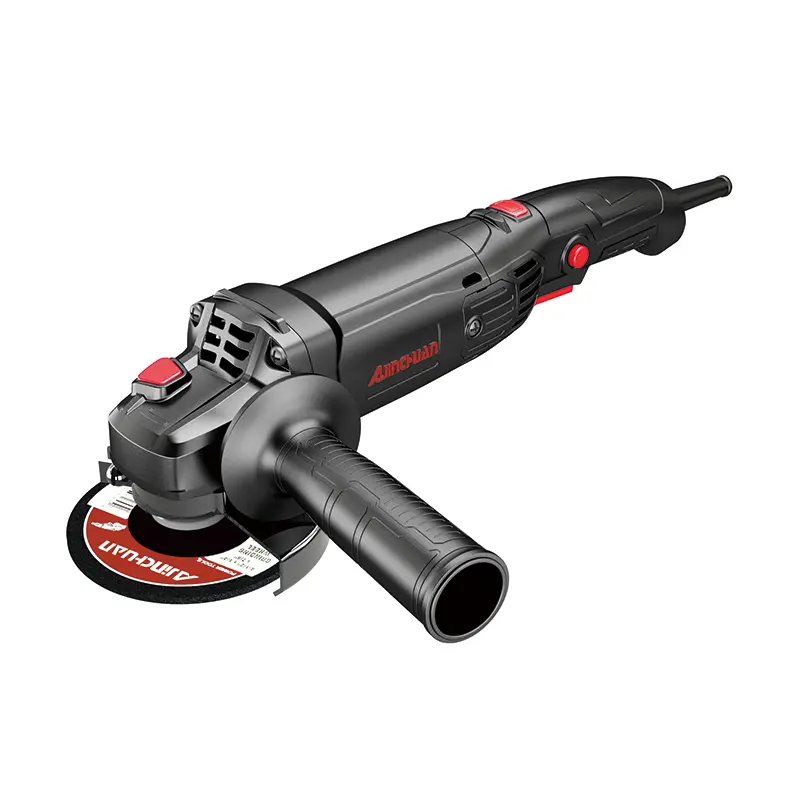
From the core differences between casting and die-casting processes, to their correlation with housing strength, through scenario suitability and cross-border procurement pitfalls—the essence of selecting grinding machine housing processes lies in precisely matching usage requirements. Selecting the right process ensures operational safety while balancing cost and lifespan. This underscores the core value of understanding how casting and die-casting processes relate to manufacturing methods and strength in angle grinder housings—Casting vs. Die-Casting: Manufacturing Methods and Strength Correlation for Angle Grinder Housings.
Meta Description: Casting and die-casting techniques decisively influence angle grinder housing strength. This article analyzes the core differences between the two processes and their logical connection to housing strength, featuring real-world industry cases, scenario-based selection techniques, and cross-border procurement pitfall avoidance tips to help you achieve precise selection, cost reduction, and efficiency gains. Cross-border buyers and B2B clients, click to obtain customized selection solutions and seize the initiative in the global power tool market.
Core Keywords: Casting and die-casting processes, angle grinder housing, angle grinder housing strength, cross-border procurement of angle grinders, aluminum alloy angle grinder housing, industrial-grade angle grinder housing
Post time: Dec-31-2025