
The hexagonal drive head design of the hexagonal demolition hammer: Which types of drill bits does it fit?
The hexagonal drive head design of the hexagonal demolition hammer: Which types of drill bits are compatible? This is a common problem faced by many cross-border buyers and end-users – choosing the right drill bit can double the operation efficiency, while choosing the wrong one may result in slipping, stuck drill bits, even burning the motor and damaging the drive head. According to industry statistics, nearly 40% of demolition hammer failures are related to the mismatch between the drive head and the drill bit. Many buyers, due to not understanding the matching logic, purchase drill bits that cannot meet the requirements of the target market’s working conditions, leading to a high return rate. This article disassembles the core design of the hexagonal drive head, clarifies the types of drill bits compatible in different scenarios, and teaches you to avoid selection mistakes. Below, from the dimensions of matching logic and scenario plans, combined with practical cases, detailed explanations are provided.
The core of the hexagonal drive head design: Why adaptability is the key?
The hexagonal drive head of the hexagonal demolition hammer has the core advantages of high transmission efficiency and stable clamping. Its hexagonal structure can maximize the contact with the drill bit shank, reduce power loss, and prevent the drill bit from slipping during operation.
The adaptability directly determines the safety and efficiency of the operation. An inappropriate drill bit will result in uneven force distribution, which not only affects the removal effect but also accelerates the wear of the drive head and shortens the service life of the equipment.
Here is a real case: In 2024, a cross-border purchasing company from the Middle East purchased a batch of hexagonal demolition hammers for a local construction project, but they were paired with ordinary round shank drill bits. As a result, during the construction process, the drill bits frequently slipped, causing the drive heads of 3 pieces of equipment to wear out and 12 drill bits to be scrapped. This directly delayed the project schedule by 5 days and caused economic losses of over 80,000 yuan. After replacing with the appropriate hexagonal shank drill bits, the operation efficiency increased by 30% and the equipment failure rate dropped to below 1%.
Many suppliers will ask: “Can any hexagonal drill bit be used with all hexagonal demolition hammers?” The answer is negative. Apart from the shape of the handle, the size specifications of the driver head (such as 6-point, 8-point, and the diameter of the handle) also affect the adaptability. For different power levels of the removal hammer, the specifications of the drill bit handle also vary, and they cannot be used blindly interchangeably.
Base adaptation type: The hexagonal drive head is a must-have component for the core drill bit.
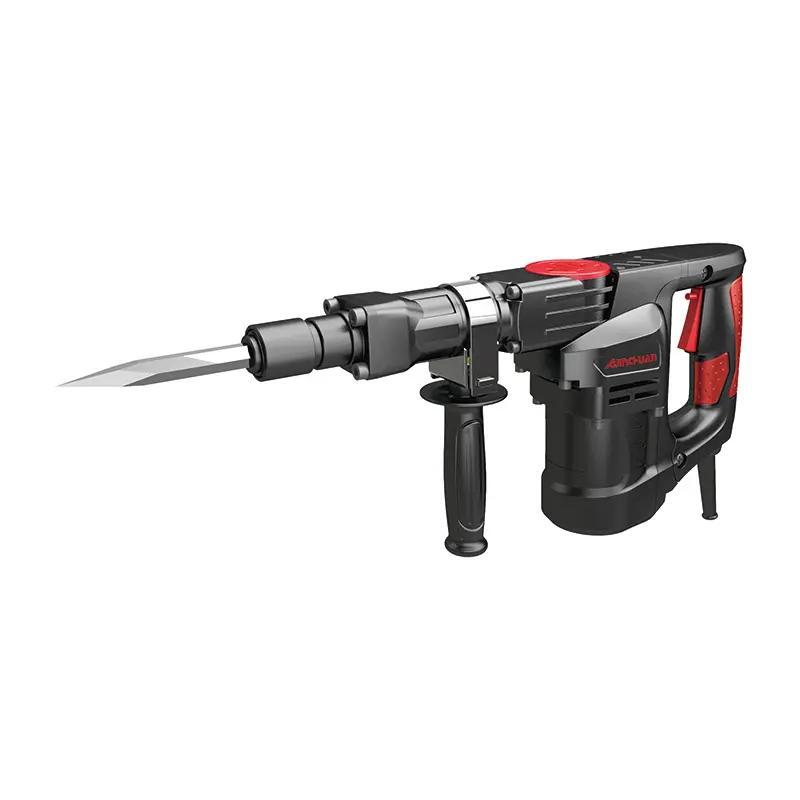
The hexagonal drive head of the hexagonal demolition hammer, the most basic and core type of adapter drill bit is the hexagonal handle series. It is mainly divided into three types: pointed chisel, flat chisel, and electric pick drill bit. These three types of drill bits cover most of the demolition operation scenarios.
The pointed drill bit is suitable for breaking the gaps in hard materials such as concrete and bricks, for instance, when slotting walls or removing the loose layers of the old ground surface. The flat drill bit is used for large-scale demolition, such as dismantling walls and clearing waste materials. Its wide cutting edge can enhance the work efficiency. The electric pick drill bit has both crushing and drilling functions and is suitable for comprehensive operations in complex working conditions.
The data shows that in global cross-border purchases of electric tools, the purchase volume of chisels and flat chisel drill bits accounts for over 65% of the drill bits used in hexagonal demolition hammers. A domestic electric tool supplier targeting the European market has focused on selling this combination of compatible drill bits. In the 2024 quarter, the sales volume exceeded 5,000 sets, and the customer repeat purchase rate reached 40%.
Common Questions: “What are the differences in application scenarios for hexagonal shank drill bits of different materials?” Alloy steel drill bits are suitable for crushing high-strength concrete and have strong wear resistance; tungsten steel alloy drill bits are suitable for handling complex situations containing reinforcing bars and have higher hardness; ordinary carbon steel drill bits offer good cost performance and are suitable for light demolition operations, such as removing brick walls. When purchasing, it is necessary to select the corresponding material based on the mainstream operation scenarios in the target market.
Drill bit adaptation solutions for special working conditions: How to precisely match requirements?
Apart from the basic scenarios, in special circumstances, it is necessary to select the appropriate drill bit specifically. For example, in the scenario of removing stone, a diamond hexagonal shank drill bit should be chosen. Its diamond cutting edge can handle hard stones such as granite and marble, preventing the drill bit from cracking.
In the scenario of removing asphalt pavement during municipal maintenance, it is suitable to use a widened flat chisel drill bit. The cutting edge width is 2-3 times larger than that of a regular flat chisel, which can quickly break through the asphalt layer and improve the work efficiency. In the scenario of removing lightweight partition walls during interior decoration, a lightweight hexagonal-handle pointed chisel can be selected to avoid damaging the surrounding wall structure.
Case reference: A cross-border purchasing company from Southeast Asia purchased hexagonal demolition hammers for local municipal engineering projects. Initially, they used ordinary flat chisel bits. During the asphalt pavement demolition operation, they could only complete 5 square meters per hour on average, and the drill bits were severely worn out. After being advised to replace with widened flat chisel bits, the operation efficiency increased to 12 square meters per hour, and the lifespan of the drill bits was extended by twice, significantly reducing the construction cost.
User’s question: “When conducting cross-border procurement, how can we match the appropriate drill bit sets based on the operational conditions of the target market?” Firstly, it is necessary to investigate the mainstream operation types in the target market. For example, in the European market, municipal engineering is prevalent, so we can focus on matching wider chisels and diamond drill bits; in the African market, construction mainly involves brick and stone structures, so we should prioritize the use of alloy steel pointed chisels and flat chisels; in the Southeast Asian market, there is a high demand for interior decoration, so we can increase the proportion of lightweight drill bits. It is recommended to communicate with the suppliers to customize the sets to enhance the product competitiveness.
Key points for selecting and configuring cross-border procurement: How to avoid risks?
When conducting cross-border procurement of hexagonal demolition hammers and their matching drill bits, it is necessary to control the compatibility from three aspects. Firstly, confirm the specification of the drive head, clearly determine the size of the hexagonal drive head of the demolition hammer (commonly available sizes include 19mm, 25mm, and 32mm), and ensure that the size of the drill bit shank is fully compatible with it.
Secondly, verify the quality standards of the drill bits, requiring the supplier to provide the material test report and hardness test data of the drill bits to avoid damage to the drive head caused by using inferior drill bits. Finally, based on the voltage and power standards of the target market, confirm the power compatibility between the demolition hammer and the drill bit.
Secondly, verify the quality standards of the drill bits, requiring the supplier to provide the material test report and hardness test data of the drill bits to avoid damage to the drive head caused by using inferior drill bits. Finally, based on the voltage and power standards of the target market, confirm the power compatibility between the demolition hammer and the drill bit. For example, a high-power demolition hammer needs to be paired with a high-strength drill bit to avoid damage to the drill bit due to excessive power.
The data shows that cross-border purchasers who strictly control the selection of adapters can reduce the drill return rate by over 70%. A certain purchaser selected suppliers based on the above criteria and customized a hexagonal demolition hammer and drill kit suitable for the European market. In 2024, the return rate was only 3%, much lower than the industry average of 18%.
Common Question: “When the budget is limited, how to balance the adaptability of the drill bits and the procurement cost?” A procurement strategy of “core model + supplementary model” can be adopted. The core model selects high-performance and cost-effective drill bits that are suitable for the mainstream working conditions of the target market (such as alloy steel chisels and flat chisels), accounting for 70%-80%; the supplementary model purchases special working condition drill bits in small quantities, accounting for 20%-30%. This not only meets the basic needs but also controls the cost.
FAQ: Answers to Frequently Asked Questions about the Compatibility of the Driver Head of the Hexagonal Demolition Hammer with the Drill Bit
Q1: Can the existing hexagonal demolition hammer’s drive head be compatible with different specifications of hexagonal drill bits?
A1: It depends on the size range of the drive head. Most demolition hammers have a drive head that supports a limited range of size adjustments, such as a 19mm drive head can be used with 18-20mm hexagonal drill bits, but the tolerance range should not exceed 0.5mm. If the specification difference is too large, a corresponding-sized drive head or drill bit needs to be replaced to avoid slipping.
Q2: After long-term use, will the wear of the drive head affect the fit of the drill bit? How to deal with it?
A2: It will. After the drive head wears out, the contact gap with the drill bit will increase, causing slippage and shaking. The solution: For minor wear, the inner wall of the drive head can be ground to adjust; for severe wear, the drive head needs to be replaced directly, and at the same time, check if the drill bit handle is worn to avoid mismatch between new and old components.
Q3: When conducting cross-border procurement, how can one verify the compatibility of the drill bits and the demolition hammers provided by the suppliers?
A3: Three steps can be followed for verification: Firstly, require the suppliers to provide an adaptation test report, including data on power transmission efficiency and wear tests; Secondly, conduct small-scale sample purchases and perform on-site working condition tests to confirm the operational stability; Thirdly, review the customer feedback from the suppliers’ previous similar products to understand the actual compatibility effect.
The hexagonal drive head design of the hexagonal demolition hammer: Which types of drill bits are compatible? This question directly relates to operational efficiency, equipment lifespan, and procurement costs, and is a core knowledge that cross-border purchasers and end-users must master. Mastering the basic compatibility types, special working condition solutions, and procurement selection points is necessary to precisely match requirements and avoid risks. And the hexagonal drive head design of the hexagonal demolition hammer: Which types of drill bits are compatible? This is precisely the key point that every electric tool industry professional and purchaser needs to deeply understand.
Meta Description
This article is written by a veteran professional in the electric tool field, focusing on the design of the hexagonal drive head of the hexagonal demolition hammer: Which types of drill bits are compatible? Explains the basic compatibility types, special working condition solutions, integrates real industry cases and answers to procurement questions, teaches cross-border purchasers and B-end customers to make precise selections, avoids compatibility risks, and improves work efficiency. Read immediately to master practical methods and optimize procurement and operation strategies!
Core Keywords
Hexagonal demolition hammer drive head compatibility, demolition hammer drill bit selection guide, cross-border purchase of electric tool drill bits, hexagonal handle drill bit application scenarios, electric tool drive head drill bit matching
Post time: Dec-29-2025